Loading Radix Peptides
Preparing this page…
Loading Radix Peptides
Preparing this page…
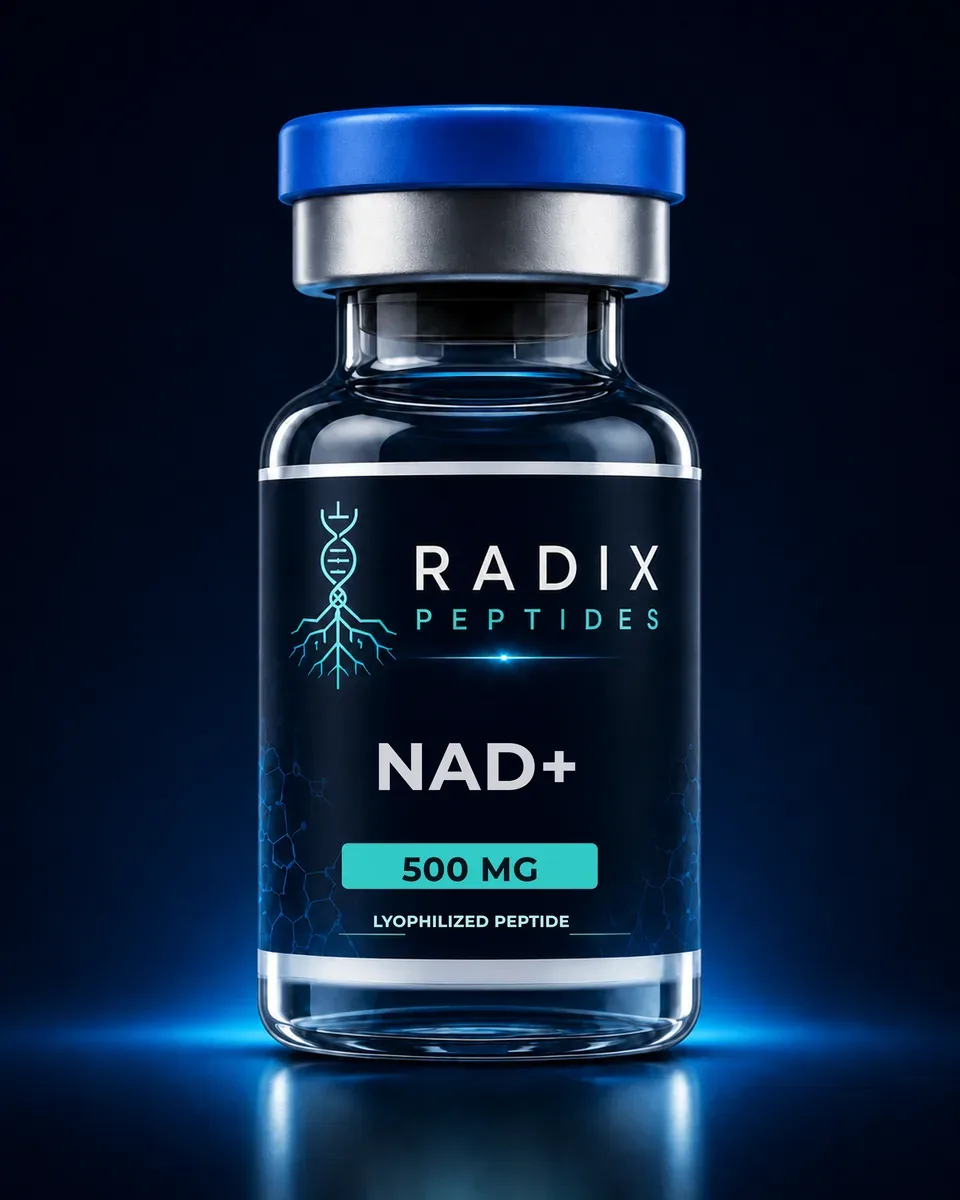
500mg Lyophilized Compound
A coenzyme central to cellular energy metabolism, studied in metabolic- and aging-research models.
A coenzyme central to cellular energy metabolism, studied in metabolic- and aging-research models. Animal and in-vitro studies have examined roles in DNA-repair pathways, mitochondrial function, and endpoints in rodent models of metabolic and neurodegenerative disease. Findings are limited to the models described.
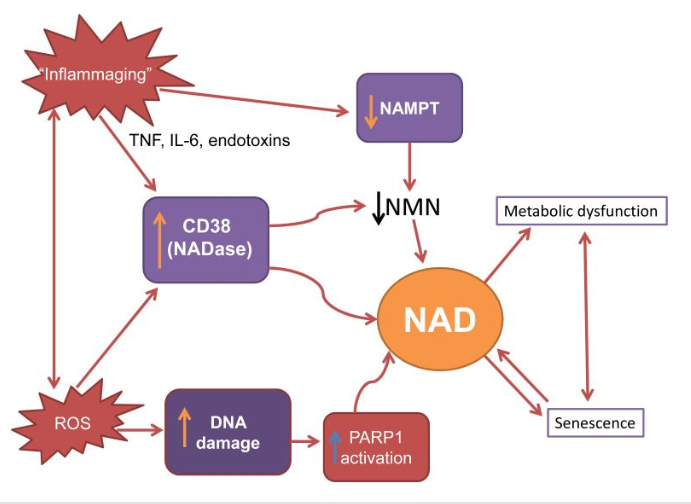
One of the primary results of the standard aging process is a decline in both the quality and activity of mitochondria. Mitochondria are the body’s power plants, producing the energy for everything from neuron firing to digestion and muscle function. A decline in mitochondrial functioning has been associated with normal aging, but is also a factor in a number of age-related disease processes. Research shows that mitochondrial aging contributes to cellular senescence, inflammation, and even changes in stem cell activity that reduce rates of healing and make it harder for the body to recover from injury in old age[5].
” In other words, mitochondria are the lynch pin of cellular aging and understanding how to protect their function is a necessary first step in understanding how to slow, stop, or even reverse the aging process.
Research completed in 2013 showed that declining levels of NAD+ leads to a pseudohypoxic state within cells. This, in turn, interrupts the normal signaling that takes place between the nucleus, where DNA resides, and the mitochondria. By supplementing old mice with NAD+, mitochondrial function is restored and the communication commences again[7].
Source: PubMed
Research shows that exercise training actually has the same effects on aging mitochondria as NAD+ supplementation does. It appears that, in both cases, intervention helps to prevent changes in peroxisome proliferator-activated receptor gamma co-activator 1-alpha (PGC-1-alpha) signaling that lead to mitochondrial dysfunction[10].
Research in mouse models of skeletal muscle aging suggests that exercise training helps to maintain muscle oxidative capacity over a lifetime. At least part of the reason that this works is that exercise increases PGC-1-alpha levels, which in turn helps to protect mitochondrial DNA, oxidative proteins, and angiogenic (blood vessel stimulating) proteins[11].
There is good evidence from animal models to suggest that NAD+ supplementation can offset some of the effects of mitochondrial aging. Much of this evidence, however, comes from animal models. In both cases, the simple cofactor holds a great deal of promise for, at the very least, slowing the progression of these devastating diseases.
Only buy NAD+ if you are a licensed researcher.
Research use only. This product is intended strictly for laboratory research and is not for human or veterinary use, diagnosis, or treatment. Read the human-consumption FAQ.
Store lyophilized powder at -20°C, protected from light and moisture. After reconstitution, refrigerate at 2–8°C and use within 30 days. Avoid repeated freeze–thaw cycles.
Published third-party analytical documentation for this research compound.
Load the complete certificate when you are ready to view it. The PDF is not downloaded during the initial page load.