Loading Radix Peptides
Preparing this page…
Loading Radix Peptides
Preparing this page…
10mg Lyophilized Peptide
A synthetic tetrapeptide studied in aging and telomere-biology research.
A synthetic tetrapeptide studied in aging and telomere-biology research. In cell and animal studies it has been examined for effects on telomerase activity, melatonin secretion, and lifespan endpoints in rodents. Reported findings are model-specific.
Research in cell cultures shows that epithalon interacts directly with DNA to turn on and enhance the expression of certain genes. Epithalon interacts with the promoter regions of genes for CD5, IL-2, MMP2, and Tram1[5]. CD5 and IL-2 both affect the function of the immune system while MMP2 plays a critical role in the maintenance of extracellular matrix in skin, tendons, and other connective tissue. These findings suggest that epithalon may impact the function of the immune system and the ability of the body to heal itself following not only injury, but following typical day-to-day stress as well.
It is not surprising that epithalon impacts the immune system. Research in rats indicates that epithalon boost the expression of interferon gamma in aging lymphocytes[6]. Interferon gamma is a critical signaling molecule in the immune system. It is important for fighting off viral infections through the activation of macrophages, natural killer cells, and T cells.
As stated above, epithalon has a positive effect on the gene that regulates MMP2. MMP2 is a protein found in connective tissue like skin. Research in rodents indicates that not only does epithalon activate this gene, it activates fibroblasts, the cells that produce and maintain MMP2 as well as other components of the extracellular matrix like collagen and elastin. Mice exposed to epithalon show an increase in fibroblast activation of 30-45%[7]. By activating fibroblasts, epithalon can help to boost rates of healing and offset the natural decline in skin structure and integrity that occurs with aging.
Further evidence for epithalon’s benefit in skin comes from the fact that it decreases caspase-3 activity. Caspase-3 is an enzyme in the apoptosis or programmed cell death pathway. By decreasing caspase-3 activity, epithalon helps to protect fibroblasts and other skin cells, keeping them alive and healthy for longer periods of time[8].
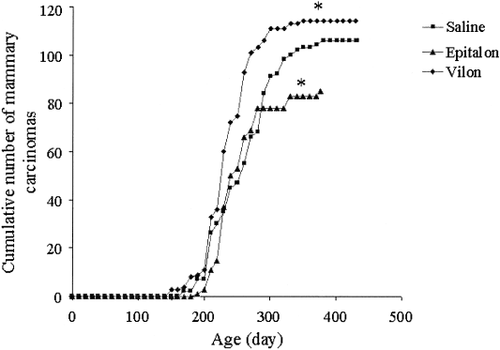
Slowed tumor growth in mice exposed to epithalon compared to controlsSource: Wiley Online Library
PER1 Causes Increased Rates of Ionizing Radiation-Induced Cell DeathSource: Molecular Cell
Melatonin, which is linked to sleep and aging, is produced by the pineal gland. Both of these genes play an important role in melatonin production and in the circadian (day/night) control of melatonin release. Research in monkeys indicates that epithalon restores melatonin secretion to normal[16].
Research use only. This product is intended strictly for laboratory research and is not for human or veterinary use, diagnosis, or treatment. Read the human-consumption FAQ.
Third-party analytical documentation for Epithalon.
Store lyophilized powder at -20°C, protected from light and moisture. After reconstitution, refrigerate at 2–8°C and use within 30 days. Avoid repeated freeze–thaw cycles.
Published third-party analytical documentation for this research compound.
Load the complete certificate when you are ready to view it. The PDF is not downloaded during the initial page load.
You May Also Like